
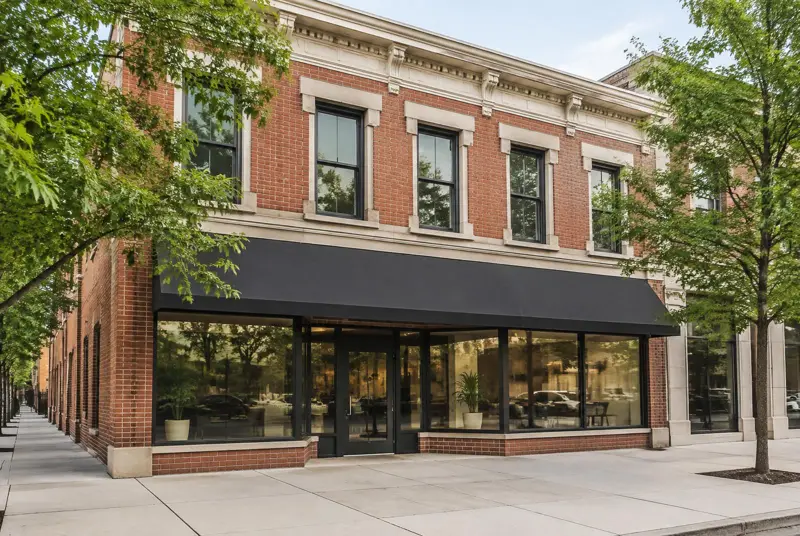
Brick and painted commercial building with a clean concrete sidewalk in Chicago, showing surfaces for pressure washing vs soft washing

Guide

Pressure Washing vs Soft Washing: Which Do You Need in Chicago?

Pressure washing is the right method for concrete: sidewalks, garage decks, dumpster pads and plazas. Soft washing is the right method for painted surfaces, EIFS, metal panels, awnings and flat roofs. Most Chicago commercial properties need both, chosen surface by surface.

Pressure washing vs soft washing is not a choice between a good method and a bad one. Pressure washing uses high-pressure water to cut through dirt, gum and oil on hard surfaces. Soft washing uses low pressure and a cleaning solution that does the work, so paint, coatings and roof membranes stay intact. A typical Chicago property needs its sidewalk and garage pressure washed and its painted trim, awnings or roof soft washed.

Not sure which method your building needs? Send the address and what you want cleaned, and we will tell you the method for each surface.

Pressure Washing vs Soft Washing at a Glance

Pressure washing and soft washing differ in pressure, in what does the cleaning and in the surfaces they suit. The table compares both methods for Chicago commercial buildings.

  • What it is

    Pressure washing
    High-pressure water, with a rotary surface cleaner on flat concrete
    Soft washing
    Low-pressure rinse and a cleaning solution that sits on the surface before it is rinsed off
  • Best for

    Pressure washing
    Concrete sidewalks, garage decks, dumpster pads, plazas and loading docks
    Soft washing
    Painted surfaces, EIFS, metal panels, awnings, flat roof membranes and organic growth on walls
  • Main risk if misused

    Pressure washing
    Wears soft brick, washes out old mortar, strips paint and forces water behind EIFS
    Soft washing
    Overspray on plants and finishes if the solution is not controlled and rinsed
  • How long results last

    Pressure washing
    Removes the dirt on the surface; foot traffic and salt bring it back
    Soft washing
    Kills algae and mildew at the root, so growth returns more slowly
  • Price level

    Pressure washing
    Priced by area and access; large flat concrete is among the fastest areas to clean
    Soft washing
    Priced by area and access; the solution and dwell time add to the job
  • Time on site

    Pressure washing
    Fast on open, flat areas
    Soft washing
    Slower, because the solution needs time to work

When to Choose Each Method

The surface decides the method. Use the two lists below to match each part of your Chicago property to pressure washing or soft washing.

Pick pressure washing if

  • The surface is concrete or hard pavers.
  • You are dealing with gum, oil drips, tire marks or the white salt film left by winter.
  • The area is flat and open, like a garage deck, plaza or alley.
  • Grease has built up around a dumpster pad or loading dock.

Pick soft washing if

  • The surface is painted, EIFS, vinyl or metal panel.
  • You see green, black or gray growth on shaded walls, awnings or roofs.
  • The roof is TPO, EPDM or modified bitumen.
  • Older brick, greystone or limestone needs cleaning without wearing the face or the mortar.

How Pressure Washing and Soft Washing Are Done

Both methods start with protecting doors, glass and plants and end with a rinse. What changes is how the dirt comes off.

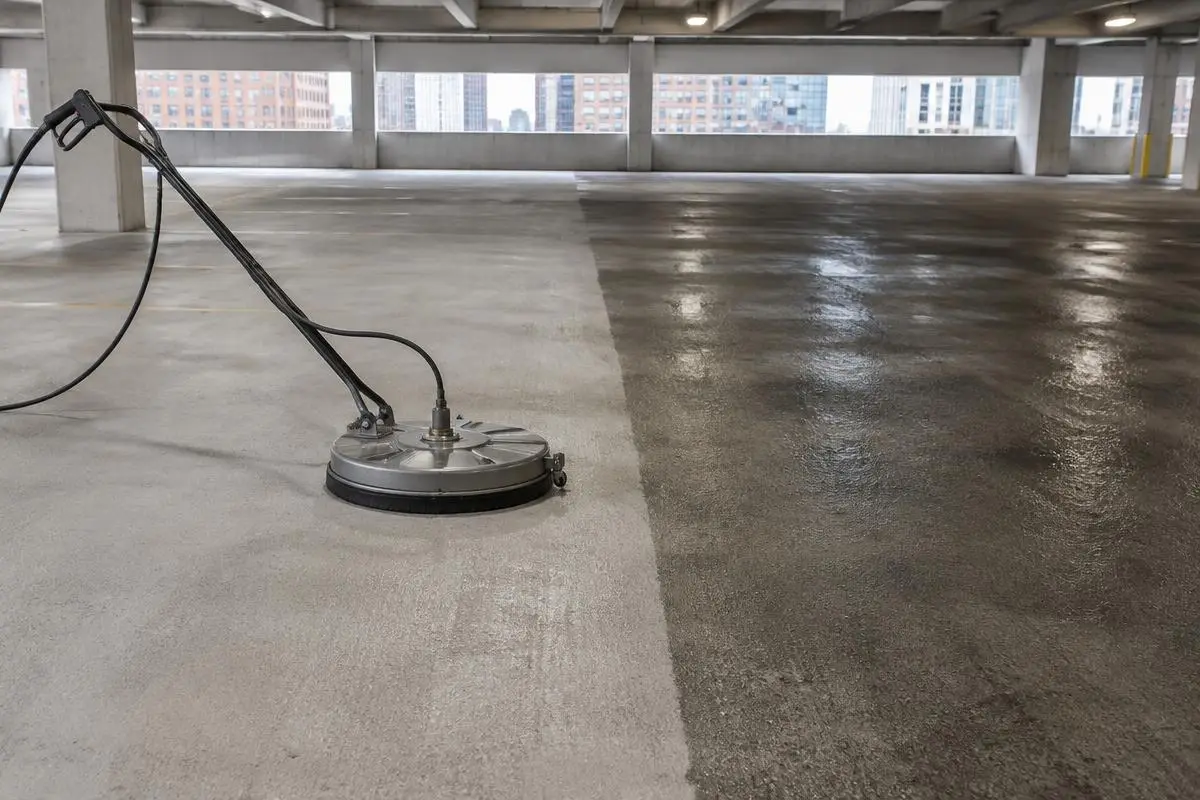
Concrete parking garage deck in Chicago with a clear line between the cleaned and uncleaned surface

How pressure washing works

Pressure washing sends water through a narrow nozzle at high pressure. On flat concrete, a rotary surface cleaner spreads that pressure evenly so the deck or sidewalk does not end up striped. Oil, grease and gum get a degreaser or pre-treatment first, and the wash water is directed away from entrances and toward drains.
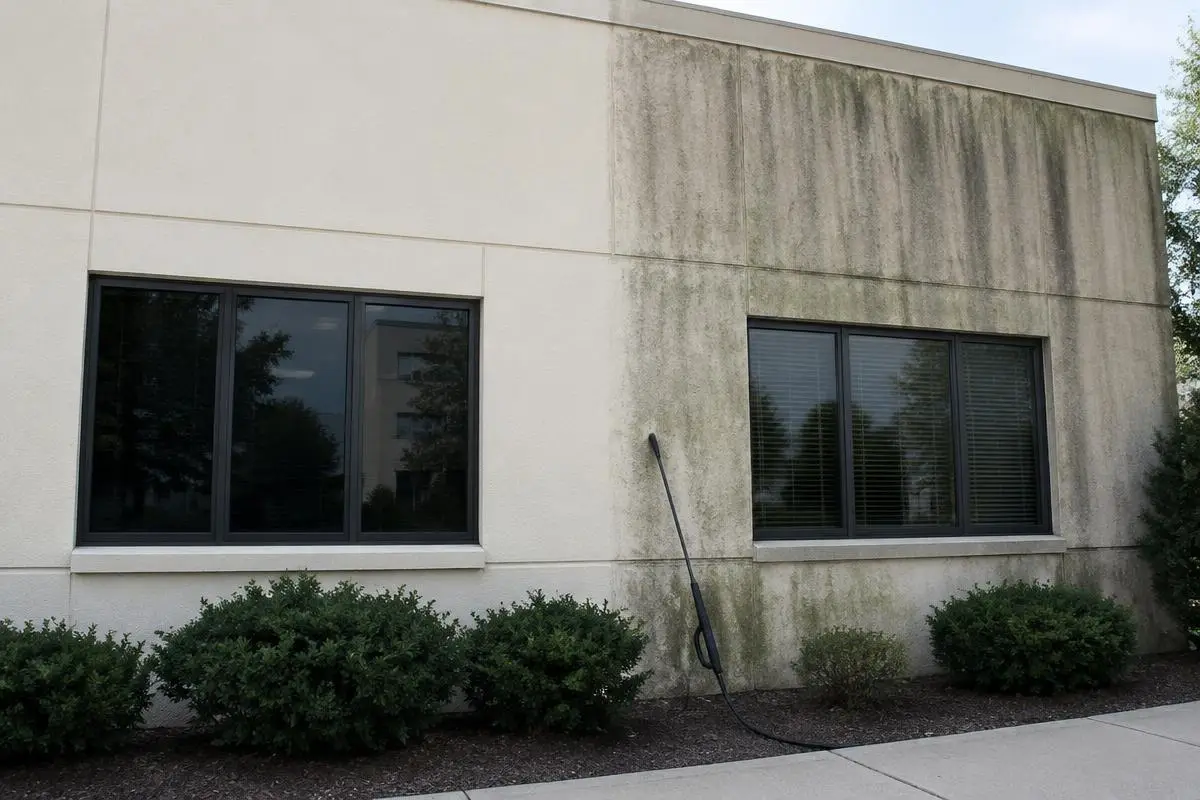

EIFS office facade in Chicago, half cleaned by soft washing

How soft washing works

Soft washing applies a cleaning solution at low pressure and lets it sit for a few minutes, so it breaks down dirt, algae and mildew. The surface is then rinsed with low-pressure water. The pressure stays low enough that paint, sealants, coatings and roof membranes are not damaged.

What Goes Wrong With the Wrong Method in Chicago

In Chicago, the wrong method shows up as worn masonry, damaged finishes or stains that never come off. The city's older brick buildings, freeze-thaw winters and flat commercial roofs make the choice matter.

  • High pressure on old brick and mortar

    Many commercial buildings in Lincoln Park, Old Town and Lakeview are older brick and greystone. High pressure can wear the face of soft brick and wash out mortar joints, and water driven deep into the wall before a hard freeze adds to freeze-thaw damage. Lincoln Park, Old Town, Lakeview

  • High pressure on EIFS and painted surfaces

    EIFS, the stucco-like finish on many newer storefronts and offices, can be gouged by high pressure, and water forced behind it can stay inside the wall. Painted trim, doors and metal panels can lose paint or coating.

  • Soft washing where pressure is needed

    A cleaning solution alone will not lift oil drips, gum or the salt film Chicago winters leave on concrete. Garage decks, sidewalks and dumpster pads need pressure, often after a degreaser or pre-treatment.

  • High pressure on flat roofs

    Flat roof membranes common on Chicago commercial buildings, such as TPO, EPDM and modified bitumen, can be damaged by high pressure. Low-pressure cleaning with suitable products is the approach roofing manufacturers generally recommend.

Not Sure? How We Choose the Method on Site

Commercial Pressure Washing Chicago chooses the method surface by surface during the site walk. We look at what each surface is made of, its age and condition, the kind of dirt or growth on it and what sits around it, such as plants, glass and entrances. Where a surface is delicate, we test a small area first. Your written quote lists the method for each area.

Pressure Washing vs Soft Washing FAQ

Is soft washing safe for brick buildings in Chicago?

Yes. Older Chicago brick, greystone and limestone are cleaned with low pressure, plus a cleaning solution where there is growth or heavy soot, so the brick face and the mortar are not worn down.

Can you pressure wash EIFS?

Not with high pressure. EIFS on Chicago buildings is soft washed with low pressure and a suitable cleaner, because high pressure can damage the finish and push water behind it.

Which method removes winter salt stains?

Pressure washing. The white salt film on Chicago sidewalks, entrances and garage decks comes off concrete with pressure, sometimes after a pre-treatment. On brick, white residue can be efflorescence, which needs a gentler approach.

Is soft washing more expensive than pressure washing?

Not necessarily. In Chicago both are priced by area, access and how dirty the surface is. Soft washing adds solution and dwell time, while large flat concrete is among the fastest areas to pressure wash. Commercial pressure washing cost in Chicago

Does soft washing harm plants?

It should not. A careful crew wets and rinses plants before and after and keeps the solution off them. Ask any Chicago company how it protects landscaping before work starts.

Can one visit include both methods?

Yes. Most Chicago commercial properties need both, so one written scope can cover pressure washing for concrete and soft washing for facades, awnings or roofs.

Get a Quote With the Right Method for Every Surface

Send your Chicago address and what you want cleaned. We will walk the site and send a written quote with the method for each surface.

Request a Commercial Quote

CallGet a Quote